Dealing with Depression & Anxiety with Endometriosis
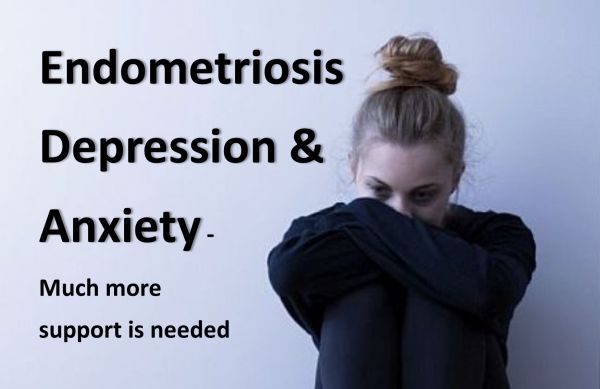
Endometriosis has far reaching affects in a woman’s life and this includes how it affects her mentally. This can manifest as depression and anxiety and causes a great amount of daily distress. Until recently the emotional effects of this disease have not been openly discussed very freely, either by those who suffer the disease or by the medical profession. Thankfully, due to the internet and social media groups, women can now start to share how this disease is affecting them both physically and mentally.
Unfortunately, suffering from depression is seen as a weakness in modern society and many people keep their depression quiet, mostly because opening up about depression can drive people away – just when you need them most. So, people who suffer emotional distress often have to suffer in silence. This is really hurtful when even family and friends turn a blind-eye and refuse to recognise the hurt and distress you are feeling.
This is especially true for those who suffer from endometriosis as they soon find out that they are 'banging their head against a brick wall' when it comes to being taken seriously. They are often dismissed by the medical profession and told they are being dramatic or that it is all in their head! This disease can leave many feeling isolated which can make the problem of suffering from stress and anxiety even worse.
There really needs to be much more discussion around the topic of mental health in relation to such a serious diesase like endometriosis.
As Nancy Petersen, endometriosis advocate and RN, has said: “Endometriosis is not fatal, but despair can be.”
Good Reason for Depression
Because the disease of endometriosis affects so many areas in a woman’s life, it will cause stress and worry and depression on many levels.
There is the constant stress on a daily basis of dealing with the symptoms of pain, inflammation, abdominal distress, fatigue and generally feeling really unwell. Going through this day in, day out is enough to cause severe depression.
Add to the daily grind of symptoms is the worry about jobs, finances, medical costs and future financial insecurity. The financial impact can be huge for many sufferers with the constant worry about the ability to be able to keep working. Medical bills can very quickly add up especially when living in a country with no free medical care or the treatment is not covered by insurance.
Then there is the issue of how endometriosis affects a woman’s relationships. Many of their friends start to disappear one by one. Having endometriosis often means having to cancel arrangements and social engagements till eventually they are no longer included in social invites. Women are then left feeling more and more isolated and abandoned. Even family members can be insensitive, not believing how bad the symptoms of this disease can be.
There is the huge stress that can be placed on close personal relationships, which can be seriously affected because of problems concerning painful sex and intimate relations. This can often lead to the breakdown of relationships and can (and does) end marriages.
One major fear is the possibility of infertility which weighs in heavily and can cause severe anxiety and stress. This too can lead to tensions in a relationship when hoping to have a family. Being witness to friends going in and out of the maternity unit really does ‘rub salt into the wound’. Even watching television adverts about baby products with gurgling happy babies can cause distress and increase depression.
All these factors added up can really put severe strain on emotions and will only get worse without some sort of support being provided.
Biological Causes of Depression with Endometriosis
Endometriosis also involves a number of biological and chemical changes in the body which is why anxiety and depression are so common - so it's not just 'All in your head!'
Endometriosis affects the brain through systemic inflammation, chronic pain pathways, and hormonal disruptions that alter mood-regulating regions in the brain. This constant immune activation keeps the body in a prolonged stress state, significantly raising the risk of clinical depression.
Systemic inflammation - Inflammatory chemicals released by endometriosis travel through the bloodstream and trigger immune cells in the brain (glial cells and microglia), which are heavily linked to depressive behaviors.
Central sensitization - Constant pelvic pain rewires how the central nervous system processes signals, altering areas of the brain responsible for emotion, reward, and self-regulation.
Gene expression changes - Research shows that the physical presence of endometriosis alters genetic expression within brain structures that govern anxiety and mood.
Hormonal fluctuations - Estrogen and systemic hormone shifts interact directly with neurotransmitters like serotonin and dopamine, impacting emotional stability.
Prostaglandin release – endometriosis causes the body to release higher levels of prostaglandins. Prostaglandins are fat-based chemical messengers that enter the brain during physical stress or inflammation, where they activate the nervous system, disrupt neurotransmitters like serotonin, and trigger anxiety, fatigue, or depressive moods.
A research team led by Hugh Taylor at Yale University induced endometriosis in mice by implanting endometrial tissue into their abdominal cavities. The animals shortly developed depression and anxiety. Depression and anxiety are directly caused by the disease.' (1)
My own run-in with depression when I was dealing with endometriosis would often cross over into anger. I was angry at the severe limitations this disease caused. I was angry, mixed with depression, when friends would ask me to join them for a social gathering and I simply could not make it due to pain and fatigue or going through yet another endo flair.
It was often cyclical – my anger would lead to depression and the depression would lead to anger.
I had to suck it up, like so many others who suffer this disease. I had very limited support and had to constantly rely on the small circle of friends who stood by me.
Drug Support
I know many will turn to pharmaceuticals for help when the depression seems too much. This is understandable and I have been in the same situation myself. Please only use this course of action as the last resort. Many drugs can have serious side effects, they can deplete vital nutrients from your body and finally, some of them can be really hard to come off and have to be weaned very slowly - I have first hand experience of this, so believe me I know.
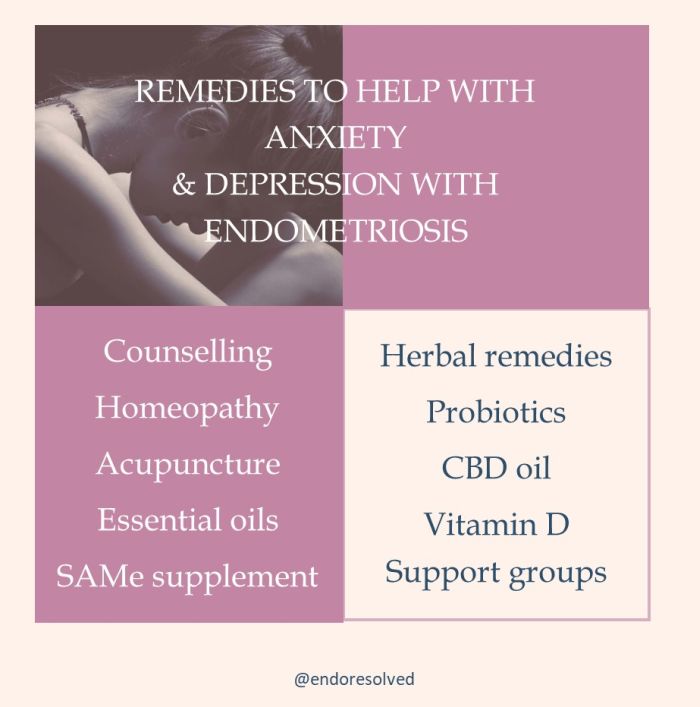
Remedies to Help with Anxiety & Depression
What are the measures you can take to help with the emotional aspect of endometriosis?
Counselling
Talking to a therapist or counsellor can be a game-changer if you’re feeling overwhelmed, burnt out, or just struggling emotionally. They can help ease your mental load so that you don’t have to carry all this on your own.
You need a sympathetic trained counsellor. Counselling is not about giving advice or solving your problems. A good councillor will help you to explore your feeling and emotions and allow you to talk openly and freely.
This is something that is often not possible to do with family or friends because there is emotional involvement, or their opinions are in conflict with the issues you are trying to deal with. Being able to talk to a counsellor gives you the opportunity to express your anger, fear, guilt and distress without being judged. A counsellor will not tell you what to do, or what actions to take, but they will help you navigate and work through your emotions so that you are better equipped to manage them.
Natural Therapies
There are certain natural therapies that can provide support to help manage the emotional aspects of dealing with the stress of illness. Homeopathy is a very good choice and has a huge arsenal of different remedies that can be used for very specific emotional imbalances. A homeopath will take a very detailed description of symptoms, both physical end mental.
Remedies will then be prescribed to help shift these imbalances. Some of these remedies are very strong and only a single dose may be prescribed, with a follow up visit maybe many weeks later where progress is assessed and maybe another remedy being prescribed.
Other remedies that may help include acupuncture, which can release emotional blocks and help balance the body. Aromatherapy is very powerful and many essential oils can help with different emotions.
Supplements for Anxiety
SAMe
One really good supplement to help with depression is SAMe (S-adenosylmethionine). SAMe is the synthetic form of a compound that is produced naturally in the body from methionine (an essential amino acid) and adenosine triphosphate (an energy-producing compound). SAMe is a precursor of several amino acids including taurine, glutathione, and cysteine. SAMe is used to help with depression, fibromyalgia, anxiety and pain – all of which makes this a good supplement for those with endometriosis. Additionally, SAMe is reported to support liver health by helping to increase glutathione.
St. John’s wort
Another supplement known to help depression and anxiety is St John’s Wort, known to be as effective as antidepressants but without the side effects. It’s important to note that St. John’s wort is known for interacting with lots of medications. This is especially true for blood thinners, birth control pills, and chemotherapy medications.
Chamomile
This is a great remedy used to help with sleep and anxiety. Recently, a study was conducted comparing chamomile extract with a placebo for treatment of generalised anxiety disorder. After 8 weeks of this study, results showed that people with anxiety had a significant reduction in their anxiety. Chamomile is very calming and can aid in restful sleep when taken as a tea before bedtime. You can also use chamomile as an essential oil and apply a mix before bed to help calm your system.
Ashwagandha
Ashwagandha has been used for numerous conditions, many of which have been studied scientifically. This herb can help reduce stress hormones and reduce anxiety. A treatment group in a randomised, double blind study of Ashwagandha compared to placebo demonstrated that the blood cortisol levels after 60 days showed a marked decrease, and the side effects were minimal.
You need to mindful not use ashwagandha if you have any auto-immune issues as it can trigger a flare of symptoms.
Lithium Orotate
This is another little-known supplement that can help with the mental stress caused by endometriosis.
The mineral supplement of Lithium orotate may help regulate calming neurotransmitter activity in the brain, leading to more stable moods and reduced symptoms of depression and anxiety.
Lithium orotate is a mineral dietary supplement combining low-dose elemental lithium (typically 1 to 20 mg) with orotic acid. Advocates suggest it supports mood balance, stress resilience, and neuroprotection by encouraging neurotransmitter activity and reducing oxidative stress in the brain. Lithium orotate supports calming neurotransmitters like serotonin and GABA.
This is not to be confused with the pharmaceutical form of Lithium Carbonate which is used for bi-polar and the dosage of Lithium Orotate are tiny in comparison. Lithium orotate is usually taken in low doses, most often providing around 5 mg of elemental lithium per day.
Lithium Orotate can help to regulate sleep, by supporting the circadian rhythm and neurotransmitter balance, lithium orotate may help with more restful sleep. Lithium occurs naturally in trace amounts in some food and water sources. It can be found in cereals, potatoes, cabbage, nutmeg and cumin.
The ideal time to take it is in the evening as it supports calming neurotransmitters that can aid with sleep. If you are taking any prescription drugs for anxiety or depression it is advised to consult your doctor before taking Lithium Orotate. Some people have been able to stop using prescription drugs for mental health issues by using the supplement form of Lithium in its place.
Vitamin D
A number of studies show that women with endometriosis often have lower vitamin D levels than those that do not have the disease, and lower levels may correlate with more severe pelvic pain. Vitamin D helps regulate immune function and also helps to reduce inflammation which is why you need to have optimal levels of this vital vitamin.
Low vitamin D does not directly cause anxiety, but deficiency is strongly linked to higher rates of anxiety symptoms and mood changes. Vitamin D helps regulate brain chemicals like serotonin and supports how your nervous system handles stress, meaning low levels can make your body feel more on edge.
Probiotics
Recent clinical research shows that daily probiotic supplements can help reduce symptoms of depression and anxiety. They work through the gut-brain axis by lowering inflammation and helping regulate mood-related chemicals like serotonin. Probiotics can also help reduce inflammation.
In research trails the probiotics of Lactobacillus helveticus and Bifidobacterium longum were used for three months. The results concluded that there was a significant decrease in the overall depression score of individuals on probiotic supplement as compared to those in the placebo group.
Additionally, endometriosis implants produce and release cytokines which contribute to local and systemic inflammation. In turn, cytokines induce depressive and anxiety symptoms by altering the activity of neurotransmitters. Probiotics can help lower pro-inflammatory cytokines and boost anti-inflammatory ones. They do this by interacting with immune cells in your gut and strengthening the intestinal wall, which stops harmful substances from triggering body-wide inflammation.
Best Helpful Strains
Lactobacillus helveticus: Linked to lower anxiety and better stress response.
Bifidobacterium longum: Known to support relaxation and positive mood.
Lactobacillus rhamnosus: Associated with reduced stress hormone levels.
Most studies show benefits after taking a supplement consistently for 6 to 8 weeks or longer.
CBD OIL
CBD (cannabidiol) oil interacts with the body's endocannabinoid system. It binds weakly to CB1 and CB2 receptors, boosts natural endocannabinoids and activates serotonin receptors to help regulate pain, mood, inflammation, and stress response without causing a feeling of being high.
The key effect of CBD oil and mood relates to serotonin. The role of serotonin in the brain helps bring feelings of calm, focus, and emotional balance. Serotonin also helps to regulate the sleep cycle and control digestion. About 90% of the body's serotonin is found in the digestive tract, while a small amount acts as a neurotransmitter in the central nervous system.
Pre-clinical studies published by the National Institutes of Health (NIH) indicate that CBD acts as a partial agonist on serotonin receptors, which are heavily involved in mood and anxiety regulation.
CBD may also help regulate cortisol production, potentially lowering physiological stress. Other symptoms that CBD oil can help include dealing with insomnia and chronic anxiety as well as helping to reduce pain.
Limited research has been done into the efficacy of CBD oil to help with any health issues, mainly due to the lack of funding into such research as well as the lack of FDA approval. However, for many women with endo, the best feedback and recommendations come from others who have had benefit from using CBD oil products.
Support from Others
This is probably the most important . . . Find a community that gets it – you have to find your people.
There are many endo communities who understand the frustration and the struggle of trying to live a normal life while your body fights against you.
Finding others in the same situation as yourself can be very empowering and provide great relief to know that you are not alone in this struggle. Joining some of the online forums, message boards, Facebook groups or other social media resources can give you a life-line to provide you with support, share experiences and learn tips that have helped others.
To help manage the depression and anxiety of this disease there are a number of measures you can use to help. The main thing is to NOT stay in isolation as this will only make matters worse. Ensure you have a support network and try some of the tools mentioned here to help you manage the emotional roller-coaster of endometriosis.
FAQ
Is endometriosis affected by stress?
Yes definitely. While stress doesn’t cause endometriosis, it can make symptoms worse. When you’re stressed, your body releases cortisol and other stress hormones, which can potentially increase your inflammation and pain sensitivity. This means that when you’re overwhelmed, your flare-ups may hit harder.
Can endometriosis cause mental health issues?
Endometriosis doesn’t directly cause mental health issues, but it can significantly increase your risk of anxiety and depression. Living with chronic pain every day can be exhausting, and doctors ignoring or dismissing that pain can add a whole other layer of frustration and helplessness. So many women with endometriosis are simply gaslit which really should not happen. If your doctor is not taking your pain or depression seriously then you need to change to another doctor.
How do you mentally cope with endometriosis?
Support is vital. Online communities, local support groups, and close friends who understand can make a world of difference. Also try some of the remedies above. I am sure you may have your own favourite self-help remedies that have proved helpful. If you need help, ask others what they have found helpful. Just remember we are all different and what helps someone else may not prove helpful for you.
You might like these
Endometriosis and the SIBO connection
Recent research shows that 92% of endometriosis patients with digestive issues test positive for SIBO which could be the cause of your endo belly
Endometriosis and Leaky Gut Syndrome
There appears to be a link between endometriosis and Leaky Gut Syndrome which has been found to affect 45% of women with the disease and Leaky Gut can compromise the immune system
Endometriosis Adhesions
A description of adhesions and how they are caused by the disease or by post operative scarring
Managing an endometriosis flare
Endometriosis commonly causes painful flares where symptoms become much worse. Here we look at some of the triggers and self-help measures you can use
Tips on managing your fatigue with endometriosis
This endometriosis guest article has some helpful tips and advice on how to manage the fatigue that is so common for women with endometriosis




About the Author
Hi, I am Carolyn Levett, the Founder here at endo-resolved - I am an Integrative Health Coach having studied nutrition, naturopathy and aromatherapy as well as being a published author of three endometriosis books. I used to suffer from severe endometriosis and was fortunate to be able to regained my health and recover from this disease with the support of nutrition, natural therapies and lots of determination.
My motivation is to help other women with endometriosis to heal their bodies so they may start to overcome this awful disease without having to totally rely on toxic drugs and surgeries which can cause further damage - with healing thoughts, Carolyn.
Reference:
(1) https://academic.oup.com/biolreprod/article/99/2/349/4841840
https://www.fertstert.org/article/S0015-0282(17)30664-7/fulltext
https://www.ncbi.nlm.nih.gov/pubmed/19593179
https://pmc.ncbi.nlm.nih.gov/articles/PMC6692844/
https://www.samphireneuro.com/blog/how-does-endometriosis-impact-mental-health
https://www.sciencedirect.com/science/article/pii/S0091302222000115
https://pmc.ncbi.nlm.nih.gov/articles/PMC3748818/
https://pmc.ncbi.nlm.nih.gov/articles/PMC8980587/
https://pmc.ncbi.nlm.nih.gov/articles/PMC10490379/
https://www.sciencedirect.com/science/article/pii/S0015028201018167
https://www.hra.nhs.uk/planning-and-improving-research/application-summaries/research-summaries/a-proof-of-concept-study-of-an-accessible-lithium-supplement/
https://www.kcl.ac.uk/research/mixli
 As featured in:


About Endo Blog Contact Disclaimer Site Map Privacy Policy
Carolyn Levett BA, NT Nutritional Therapist -
Promoting health and well-being through nutrition, diet and lifestyle changes
The material on this website is intended for educational information purposes only.
It should not substitute or delay medical advice, diagnosis or treatment.
Unauthorized use of content or parts of content is prohibited without a written permission by the author.
www.endo-resolved.com Copyright (C) - All rights reserved 2026