Why Does Endometriosis Cause Pain?
The symptom of pain is reported by 95% of women with endometriosis but this pain does not equate to the stage of the disease.
Pain is THE MAIN SYMPTOM with endometriosis and nearly all women suffering this disease will suffer from debilitating pain. Unfortunately for some the symptom of pain can be constant, while for others it will only happen at certain times of the month.
As well as the pain reaction caused by the implants of endometriosis, certain actions and functions of the body can cause pain – like menstruation, ovulation, bowel movements, and intercourse.
If you understand some of the actions and reasons WHY and HOW you are suffering so much pain, you can learn about remedies and self help measures to help reduce your pain.

Let’s look at what causes pain
Nearly all pain in the body is due to inflammation. Inflammation is a natural bodily reaction to injury or damage to any tissue in the body.
The damaged site will trigger a reaction in the body that sets off the inflammatory action, blood vessels will dilate to increase blood flow to the area. Cells in connective tissue release histamines (increase blood supply to damaged site) and prostaglandins which cause the inflammation.
Another type of pain is caused by your muscles when they go into spasm – as with menstrual cramps, and you feel these cramps through pain messenger signals sent through the body to the brain.
Pain can be triggered or worsened by upregulated pain signals, increased histamine levels and hormone level imbalances. Pain will also be triggered by the muscles of the pelvis and the surrounding fascia caused by scar tissue and adhesions, and overall inflammation levels in the body.
Some of the causes of pain include:
- A major increase in inflammatory chemicals (cytokines).
- Cyclical bleeding from endometriosis growths (called endometrial implants).
- Development of scar tissue/adhesions - multiple adhesions can cause the reproductive organs to become misshapen.
- Irritation of the pelvic floor nerves or other nerves - the pelvis has the greatest concentration of nerve fibres in the body.
Pain & Inflammation
With endometriosis much of the pain may be due to inflammation especially around the implants. Pain will also be felt in the adhesions caused by endometriosis.
The immune system will then be triggered into action and a chemical chain reaction begins with lymphokines, interleukins and interferons. These white cells then pour into the damaged site with the aim to protect it and allow the body to heal the damage.
These cells build a protective layer around the problem by inflaming it. This in turn can put pressure on nerve endings which will stimulate more pain. Therefore the pain of endometriosis can become a vicious cycle where endometriosis has caused damage within the body and the body reacts by causing inflammation . . . leading to further damage.
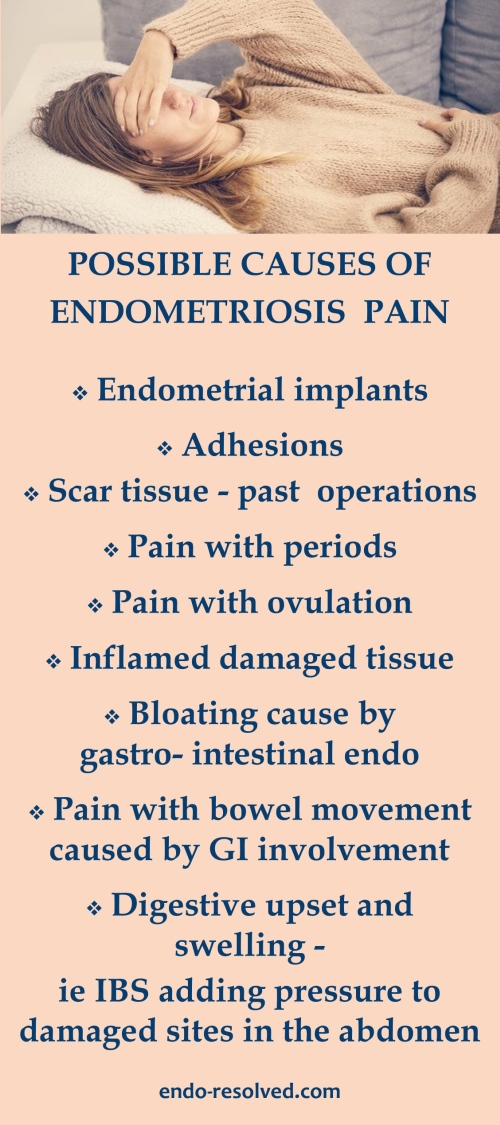
Types of Pain Caused by Endometriosis
Inflammation pain
Lesions release chemicals (prostaglandins, cytokines), that cause irritation and swelling. This swelling then leads to even further pain in the abdomen
Hormonal pain
Endometrial lesions produce their own estrogen triggering inflammation, swelling and bleeding. This can be cyclical or constant
Organ located pain
Endometrial lesions invade other organs including the bowel, bladder, diaphragm and the pelvic floor
Adhesion pain
Inflammation caused by the damage from endometriosis can fuse organs together causing pain which can affect the entire abdominal cavity
Nerve pain
Endometrial lesions attach to nerve endings, sending strong pain signals. The pelvic cavity has the most nerves in the body therefore this may account for the wide-spread pain
Gut distress
When endometriosis infiltrates the intestines it can lead to gut distress, pain and inflammation as well as disturbances in digestive tract.
How do you Reduce the Symptom of Pain?
As mentioned above, prostaglandins are one of the key natural chemicals in the body that assist the transmission of pain signals to the brain. To help you fully understand the role of these pain messenger chemicals, you will find a detailed explanation HERE
Many women are achieving positive results by making changes in their diet to help reduce their symptoms of endometriosis. There is increasing research and evidence behind using an anti-inflammatory diet which helps reduce inflammation in the body and in turn, reduces the amount of pain,
There are also safer options to help you mange your pain and there is evidence based and real-life tested natural methods of reducing pain. A number of natural supplements have been shown in research to be just as effective as some of the most commonly prescribed pain-relieving drugs, which provides a safer option for pain relief.
A really helpful tool to help you understand your tiggers of pain is to keep a symptoms diary and if you decide to make changes in your food choices by implement an anti-inflammatory diet, then including your food intake in your diary will really help you understand what is affecting your endometriosis.
You might like these
Endometriosis and Natural Pain Relief
Endometriosis pain can be reduced with various dietary supplementst and Sulphur powder has excellent anti-inflammatory benefits
Endometriosis and Prostaglandins
Endometriosis and the relevance of prostaglandins which influence the pain and inflammation symptoms of endometriosis
Endometriosis natural treatment articles
Many women are getting great results using natural remedies to help with their symptoms of endometriosis - find out more with this collection of articles
Endometriosis and your Treatment Options
Endometriosis treatment involves options depending on the severity of the disease, your medical history and whether you wish to have children
Pain medication treatments for endometriosis
Various pain medications are used to help with the symptoms of pain with endometriosis - including prescription drugs and OTC medication
Reference:
https://en.wikipedia.org/wiki/Prostaglandin
https://www.ncbi.nlm.nih.gov/pubmed/20511671
https://www.ncbi.nlm.nih.gov/pubmed/22003899
https://endometriosis.org/news/research/prostaglandins-cox2/
https://www.yourhormones.info/hormones/prostaglandins/
 As featured in:



About Endo Blog Contact Disclaimer Site Map Privacy Policy
Carolyn Levett BA, NT Nutritional Therapist -
Promoting health and well-being through nutrition, diet and lifestyle changes
The material on this website is intended for educational information purposes only.
It should not substitute or delay medical advice, diagnosis or treatment.
Unauthorized use of content or parts of content is prohibited without a written permission by the author.
www.endo-resolved.com Copyright (C) - All rights reserved 2026