Endometriosis Treatment Options
Treatment options for endometriosis need to be considered carefully, and many factors need to be weighed in when deciding which type of treatment plan to follow

There are a range of hormonal and surgical treatments available to women with endometriosis within conventional medicine. In most cases women will have been referred to a gynaecologist for their treatment, and usually a definite diagnosis will have been obtained with the laparoscopy.
Due to the difficult nature of this disease and the different ways it manifests in the body, it can often be difficult to obtain long term treatment success. Many women find themselves needing numerous surgeries or relying on different forms of hormone drug treatment or pain medication.
The options for care being offered by conventional modern medicine depends on the severity of the disease.
The objective of the treatment offered today is to help relieve the pain and reduce the symptoms. Treatment also aims to shrink or slow down the endometrial growths, to try and restore fertility and to delay the recurrence of the disease.
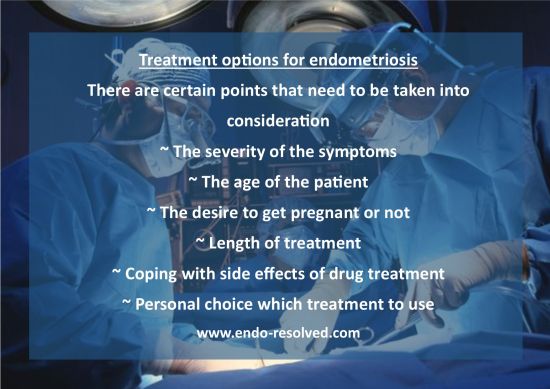
A woman’s treatment should be decided in partnership between her and her medical advisers. If you do decide to pursue your treatment with drug or surgical treatment, there will be a number of factors to take into account when deciding which treatment path to follow.
' Expert excision of Endo implants removes disease, but lack of disease does not equal good health. Diet, lifestyle, mindset and integrative therapies need to be addressed in the treatment plan to get the best possible outcomes. '
Dr. Andrew Cook MD
Treatment considerations:
Severity and type of symptoms – This may influence your options of treatment. Some women with endometriosis have little or no symptoms; and no treatment may be needed. If symptoms are mild, painkillers alone may be sufficient.
Hormone treatments - These are sometimes effective at easing pain but do not improve fertility. Surgery may be suggested if infertility is caused by endometriosis.
Age and plans for pregnancy – It has been found that symptoms often improve during pregnancy. The longer endometriosis is left unchecked the greater the chance that it will reduce fertility.
Success of treatment and side effects - The hormone treatment options all have similar success rates at easing pain, but they all have side effects. Some of these side effects are intolerable for some women and so treatment may be switched from one drug to another.
Recurrences – Even if endometriosis has been removed with surgical treatment it may recur again in the future. Unfortunately, in many cases it does recur. A new course of hormone treatment and/or surgery will have to be contemplated.
Personal choice - A woman should choose for herself which treatment option to take. She should not be coerced into any one type of treatment because it is the easiest for the physician, or it is the specialism of the physician.
Second opinion - It is also advisable to get a second opinion. You may get 2 totally different approaches and attitudes to this disease and its treatment. One physician may be counting his days to retirement and the other physician may have some personal experience of the disease.
Confidence - You need to feel at ease with you chosen health care provider no matter which field of medicine they work in. This goes a long way to having faith in the process of healing.
Other issues to consider
Risks of surgery - All surgeries carry risks such as bleeding, infection, and injury to nearby tissues. It can take a while to fully recover from surgery and this needs to be taken into account.
Hormonal therapies vary in how they work - The effectiveness and the side effects they may cause need to be understood. This can help in choosing the most suitable option for managing endometriosis symptoms.
Previous treatment history - The success or failure of previous treatments can influence current choices. Having repeated surgeries may not be the best option for some people.
Overall health and well-being - Your overall health and wellness can impact treatment decisions. Existing medical conditions may affect the choice of treatment.
Cost and accessibility - In certain countries the financial cost and the availability of treatments can influence choices. Insurance coverage can vary greatly as well as access to an experienced surgeon.
Quality of life - Assessing how different treatments may impact daily life, work, and relationships. This is especially true if considering hormone treatment which can have very noticeable side effects.
To manage endometriosis effectively requires a balance between medical support to reduce symptoms, surgical treatment to remove the disease combined with lifestyle and self-help measures.
Understanding the variety of therapies—from drug treatments and pain management to current surgery techniques along with complementary options—allows women to make informed choices when working with their doctor or specialist.
You might like these
Pictures and photographs of endometriosis
Pictures of endometriosis including images of cysts and adhesions taken during surgery
When to have surgery for endometriosis
There are various situations where surgery for endometriosis may be needed which are discussed here
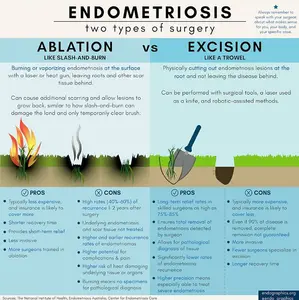
Surgical procedures for the treatment of endometriosis
Depending on the skills of your surgeon and the level of the disease, there are various surgical techniques for the treatment of endometriosis
Endometriosis & Surgery Treatment Questions
Questions to consider asking your surgeon before having surgery for endometriosis

References:
webmd.com- endometriosis
Mayoclinic.org - endometriosis
 As featured in:


About Endo Blog Contact Disclaimer Site Map Privacy Policy
Carolyn Levett BA, NT Nutritional Therapist -
Promoting health and well-being through nutrition, diet and lifestyle changes
The material on this website is intended for educational information purposes only.
It should not substitute or delay medical advice, diagnosis or treatment.
Unauthorized use of content or parts of content is prohibited without a written permission by the author.
www.endo-resolved.com Copyright (C) - All rights reserved 2026