How magnesium can help endometriosis symptoms

Magnesium is needed for every function in the body. However it is easy to become deplete in this vital nutrient for various reasons.
Magnesium has many benefits for endometriosis, depending on which type of magnesium is used. It can help with muscle pain, insomnia, bowel problems, provide a calming effect, support brain function and is involved in many biochemical processes in the body.
Magnesium is need for over 300 enzymatic reactions including energy production. It can help support normal healthy blood pressure, insulin function, normal heartbeat, and has even been shown to help relieve migraine headache. The optimum range of daily magnesium should be around 400-700 mg a day.
Magnesium supports detoxification - it is crucial for the removal of toxic substances and heavy metals such as mercury, aluminium, and lead from the body. It is a also a co-factor in the production of glutathione and the function of the P450 detoxification systems in the liver.
This mineral is closely involved in muscle function. The mechanisms are varied and include oxygen uptake, electrolyte balance, and energy production. Magnesium makes muscles work properly, allowing for correct muscle contraction and relaxation in combination with maintaining correct calcium levels.
How do we become deplete in magnesium
We can easily loose vital magnesium levels through:
- drug intake (toxic chemicals)
- low levels of digestive enzymes
- stress
- sugar intake
- alcohol
- diuretics
You can use magnesium as a spray to apply directly on the skin. Applying it after a bath or shower on the abdomen can help with the abdominal cramps caused by endometriosis.
Magnesium chloride flakes (Epsom salts) can be added to your bath water which also has the effect of helping with muscle cramps and used in the evening can help with relaxation and insomnia.
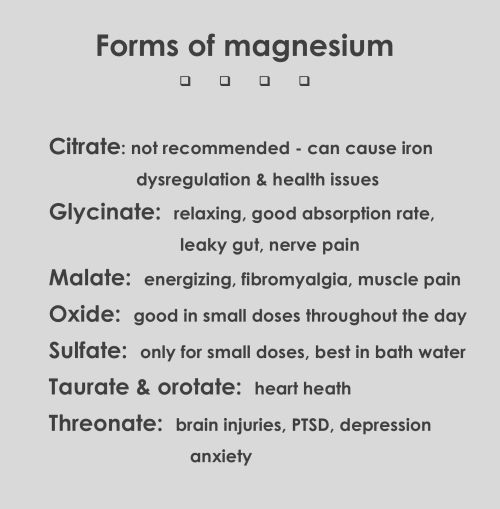
Different types of magnesium include:
Chloride – The Detoxifier
There is only 12% of magnesium in this element. This is good for detoxing but can’t be confused with chlorine which is a natural gas responsible for slow stomach metabolism
Citrate – Bowel Problems
It’s inexpensive and easily absorbed. This is good for constipation aids (rectal and colon problems) and it has a very fast absorption rate. Use sparingly as it can cause iron dysregulation and is best only used to help resolve constipation when needed.
Glycinate – Calmer
This form is very calming and good to take in the evening for sleep. This is very good for leaky guts, nerve pains, chronic pain, and it’s bio-available too!
Malate – Energy Fuel
This is great for muscle pain if your suffering from fatigue or have fibromyalgia. It has malic acid which is a natural fruit acid in our body. Hence, this makes it highly soluble. Also good for muscle pain.
Oxide – Laxative
This magnesium form has a very strong laxative effect on your stomach. It’s only good in small doses through the day. Not to be used regularly as it can cause damage to the gut lining.
Sulphate – Epsom Salts
This form soothes muscles and can be commonly referred to as Epsom salts. This is used in bath water to aid relaxation as well as soothes muscle pain.
Taurate – Cardiovascular Health
This has been describes as the best choice for cardiovascular issues as it prevents arrhythmias and heart attacks. It stabilises nerve cells, contracts heart muscles and improves blood pressure reductions.
L-Threonate– Brain Function
This version works great for mental sharpness and cognitive health. This benefits anyone suffering from depression, anxiety, PTSD.
As well as supplementing you can increase your magnesium intake with certain foods. The best sources of magnesium are found in the following:
Spinach, Chard, Pumpkin Seeds, Avocado, Banana, Dark Chocolate, Quinoa, Almonds, Black Beans, Cashews, Dark Chocolate, Figs, Yogurt, and Bananas.
Women with endometriosis are often lacking in magnesium due to estrogen dominance in their bodies. During menstruation, women’s magnesium levels can be reduced by up to 50 percent, further depleting their supply. Magnesium helps to reduce cramping, so having higher levels in our body can help minimise endometriosis pain.
You might like these
Probiotics may help reduce endometriosis symptoms
Research has shown that particular strains of probiotics may help reduce certain symptoms of endometriosis
Does the endometriosis diet work
The endo diet seems to work for many and there are testimonials and scientific research that confirms diet changes help symptoms of endo
Vitamin D and endometriosis
Low levels of vitamin D have been associated with the severity of endometriosis symptoms and supplementing can help with symptoms
Elimination diet to help endometriosis
Doing the elimination diet will really help you to discover your trigger foods that are causing your symptoms of pain and gut distress
Why its advised to quit gluten and dairy
Diet changes can help reduce symptoms of endometriosis and removing dairy and gluten can help reduce inflammation, pain bloating and gut distress






Who is behind this site . . . .
Hi, I’m Carolyn Levett, an endometriosis author, mentor, Integrative Health Coach and fellow endo warrior.
Having experienced endometriosis myself, I found my way towards better health through nutrition, natural remedies and support. I’m the bestselling author of 'Recipes & Diet Advice for Endometriosis' and 'Endometriosis – Healing from the Inside Out', and hold qualifications in nutrition, naturopathy and women’s hormone health.
I know how isolating and overwhelming endometriosis can be, especially when you feel unheard or your symptoms aren’t taken seriously. My aim is to share the knowledge, practical advice and support I wish I’d had, helping other women feel more informed, empowered and able to manage their endometriosis more naturally.
You don’t have to navigate endometriosis alone.
Reference:
https://www.ncbi.nlm.nih.gov/pmc/articles/PMC3626048/
Boyle, N. B., Lawton, C., & Dye, L. (2017). The Effects of Magnesium Supplementation on Subjective Anxiety and Stress-A Systematic Review. Nutrients, 9(5), 429. doi:10.3390/nu9050429
Parazzini F, Di Martino M, Pellegrino P. Magnesium in the gynecological practice: a literature review. Magnesium in the gynecological practice: a literature review. Magnes Res. 2017;30(1):1–7. doi:10.1684/mrh.2017.0419
 As featured in:


About Endo Blog Contact Disclaimer Site Map Privacy Policy
Carolyn Levett BA, NT Nutritional Therapist -
Promoting health and well-being through nutrition, diet and lifestyle changes
The material on this website is intended for educational information purposes only.
It should not substitute or delay medical advice, diagnosis or treatment.
Unauthorized use of content or parts of content is prohibited without a written permission by the author.
www.endo-resolved.com Copyright (C) - All rights reserved 2026