How to Treat Endometriosis Ovarian Cysts Naturally
In this article we look at what ovarian cysts actually are and how they develop. We then look at natural options that may help reduce cysts caused by endometriosis and measures you can use that may stop them developing in the first place.
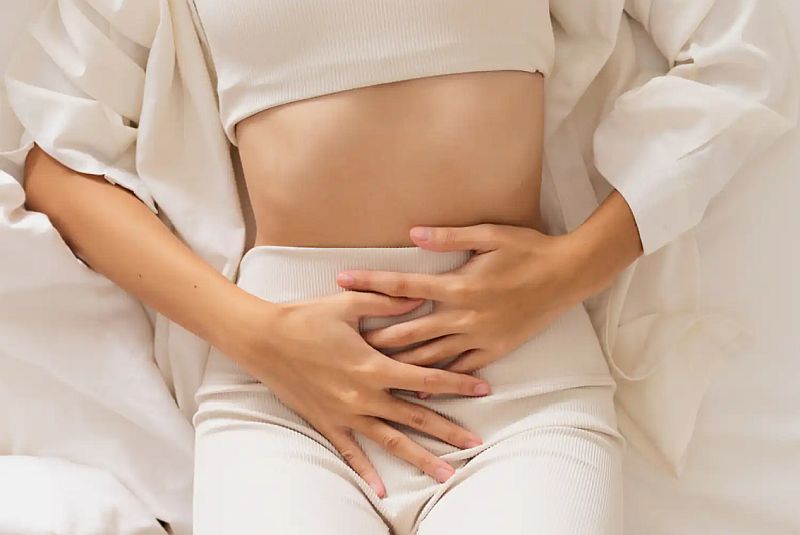
Ovarian cysts are growths that develop on the ovaries and are really common with endometriosis and if left untreated they will continue to grow and in some cases they can burst. This can be a serious and very painful situation requiring medical treatment.
Ovarian cysts can be recurring with many women having repeat surgeries to have them removed as well as removing any endometrial implants and adhesions. Unfortunately, some women are dismissed when they visit ER for help and are simply sent home with pain-killers and told there is nothing can be done.
Sometimes ovarian cysts do not cause any symptoms except for when ovulation occurs. But for many women ovarian cysts do cause symptoms most of the time with pain and ‘pulling sensations.’
My own experience – I have given a brief account of my story with endometriosis which you can read here. It is only a summary and I did not go into in-depth detail, but my own experience of dealing with an endometrial cyst was rather bizarre!
I was fortunate that the endometriosis cyst I had did not cause any real symptoms, but rather I knew ‘something was off’. When I had my first diagnostic laparoscopy for endometriosis, my surgeon did not remove any endometriosis as she said I was in such a mess she did not know where to start – her words!
I was offered drug treatment which I refused after learning of the potential side effects, and went on my own path to managing my endometriosis. Roughly 4 years later I had follow-up surgery as I felt something was not right, despite feeling fit and healthy. It was found I had a cyst on one ovary the size of a grapefruit, but - the surgeon said there was no other active endometriosis and it had all dried up.
So despite having a very large cyst I had very few symptoms - I just felt something was off! I think because I had no active endo or any adhesions, this allowed my body to’ accommodate’ a cyst of that size without symptoms.
What are cysts?
A cyst is a closed, sac-like structure lined with fibrous tissue that contains fluid or semi-solid material.
The contents differ by cyst type and where in the body they are formed. The lining of the cyst also differs depending from which tissue they are formed. Finally, the mechanism by which cysts develop differs by the specific biological process that produced the encapsulation.
The common thread of formation of nearly every cyst type is that the body has identified something — debris, fluid, keratin, damaged tissue, or foreign material — that it cannot adequately clear through normal physiological processes. The body has then walled off unwanted tissue within a fibrous capsule to contain it. This protects surrounding tissue from contents of the cyst and isolates it from the immune environment.
Normally, the immune system will mop up unwanted tissue like debris and foreign material, but in some cases the immune system is impaired which is when a cyst is formed as a mechanism to protect the body.
Cysts are the body's containment strategy when the immune system has failed.
Understanding what failed — and why — is the beginning to know how to manage and reduce cysts.
How a cyst is composed
Most cysts have a wall composed of fibrous connective tissue which is collagen-rich material that provides structure for the cyst. This fibrous wall is maintained by ongoing collagen synthesis from fibroblasts activated by local inflammation.
The knowledge of how cysts are made and maintained allows for targeted self-help remedies to be implemented to help aid healing
- Adding compounds that reduce fibroblast activation (which is triggered by injury or inflammation) and collagen over-production which can happen during tissue repair
- Using anti-inflammatory interventions like diet
- Including proteolytic enzymes which may thin and weaken the cyst wall over time, facilitating natural reabsorption.
- Add compounds that support lymphatic drainage and immune clearance – support the liver
Ovarian Cysts
Ovarian cysts are the most common cysts in women of reproductive age and among the most hormonally responsive. There are a number of different cyst types that involve the ovaries.
Functional cysts — the most common type:
Follicular cysts — develop when a follicle fails to rupture at ovulation; the follicle continues to grow rather than releasing its egg; in a normal ovulatory cycle, the LH surge causes follicle rupture and ovulation; when the LH surge is absent, delayed, or insufficient — the follicle does not rupture — it fills further with fluid and becomes a follicular cyst; most resolve spontaneously within one to three menstrual cycles as hormone levels shift
Corpus luteum cysts — develop when the corpus luteum (the structure that forms after successful ovulation) fails to regress normally and continues to fill with fluid; associated with delayed menstruation and sometimes significant pain if they rupture
Hemorrhagic cysts — follicular or corpus luteum cysts that bleed internally; the most painful type of functional cyst
Situations that Produce Functional Cysts
Anovulation — the most fundamental driver; without ovulation, follicles cannot progress through their normal development and regression cycle; anovulation is produced by chronic stress, undereating, PCOS, thyroid dysfunction, elevated prolactin, and oral contraceptive use disrupting the HPO axis
Estrogen dominance — elevated estrogen relative to progesterone stimulates excessive follicular development without adequate LH surge to trigger ovulation; gut dysbiosis-driven estrobolome estrogen recirculation, liver congestion impairing estrogen clearance, and xenoestrogen burden from plastics and pesticides all contribute
Luteinizing hormone dysregulation — an inadequate or poorly timed LH surge fails to trigger follicle rupture regardless of follicular development
Insulin resistance and elevated IGF-1 — driving the androgen excess that impairs follicular development and prevents ovulation — the primary mechanism of PCOS-associated ovarian cysts
Polycystic ovarian syndrome (PCOS) ovarian cysts are distinct from functional cysts — they represent arrested follicular development at an early stage rather than a single large dominant follicle that failed to rupture.
Endometriomas — chocolate cysts — is a collection of old menstrual blood from ectopic endometrial tissue implanted on the ovary; not strictly functional cysts but a manifestation of endometriosis in the ovarian location.
Natural Treatment Options for Ovarian Cysts
For ovarian cysts specifically:
Myo-inositol — 2–4g daily with D-chiro-inositol (40:1 ratio); the most evidence-supported intervention for PCOS-associated cysts; improving insulin signalling in the ovary and restoring ovulatory cycles
Berberine — 500mg three times daily; insulin sensitisation for PCOS; addressing the metabolic driver of anovulatory cyst formation
NAC (N-acetylcysteine) — 600mg twice daily; evidence for improving ovulation rates in PCOS; antioxidant and glutathione-supporting. Studies have shown a reduction in the size of ovarian endometriomas in patients taking NAC compared to a control group - you can read more here about the benefits of NAC for endometriosis
Omega 3 oil — GLA (gamma-linolenic acid) 2–3g daily in the follicular phase; reducing the pro-inflammatory prostaglandin environment; supporting cervical mucus production indicating ovulatory cycling
Common Factors Regarding Most Cysts
Despite the diversity of cyst types — several factors recur across multiple cyst categories as being significant contributors which is estrogen dominance
Common Causes of Estrogen Dominance
Elevated estrogen relative to progesterone — from anovulation eliminating progesterone production
Gut dysbiosis recycling estrogen – reducing estrogen synthesis
Impaired liver function - reducing estrogen clearance
Xenoestrogen burden — from chemical overload found in toiletries and household cleaners

Dealing with Estrogen Dominance
Eating cruciferous vegetables daily — from broccoli, cauliflower, kale, Brussels sprouts.
DIM is one of the best-known supplements for helping to reduce estrogen and has got much favourable feedback from those with endometriosis. Made from vegetable extracts from the brassica family (which includes broccoli and cabbage) DIM helps maintain safe estrogen levels by aiding the conversion of damaging estrogen fractions to more favourable metabolites and by promoting restoration of healthy hormone ratios.
Ongoing Support
Supporting the liver's detoxification of estrogen – support your liver DETAILS
Gut microbiome restoration — add fermented foods to your diet and prebiotics, and targeted probiotic support for Lactobacillus dominance
Liver support — milk thistle (silymarin), dandelion root, artichoke extract, adequate hydration, castor oil packs; the liver is the primary estrogen processing organ and its functional capacity directly determines estrogen clearance efficiency
Progesterone support — zinc and vitamin C supporting corpus luteum function, Vitex (chasteberry) reducing prolactin and supporting luteal phase progesterone, bioidentical progesterone where clinically indicated.
Reducing xenoestrogen exposure — use glass storage instead of plastic, filtered water, natural personal care products, organic foods whenever possible, safe alternative period products
Ground flaxseeds — lignans modulating estrogen receptor activity; 1–2 tablespoons ground flaxseed daily. Add to smoothies or mix into meals
Further Reading
You will find more details of how to reduce estrogen dominance with more advice of natural remedies you can use here
You might like these
Endometriosis and Laparoscopy
Laparoscopy advice used for diagnosis and surgical treatment of Endometriosis
Endometriosis Diagnosis
Description of the various methods used to diagnose endometriosis including laparoscopy, imaging test, biochemical markers
Endometriosis - Personal diagnosis experience
Read personal accounts how long it took to obtain a correct diagnosis for endometriosis




Who is behind this site . . . .
Hi, I’m Carolyn Levett, an endometriosis author, mentor, Integrative Health Coach and fellow endo warrior.
Having experienced endometriosis myself, I found my way towards better health through nutrition, natural remedies and support. I’m the bestselling author of 'Recipes & Diet Advice for Endometriosis' and 'Endometriosis – Healing from the Inside Out', and hold qualifications in nutrition, naturopathy and women’s hormone health.
I know how isolating and overwhelming endometriosis can be, especially when you feel unheard or your symptoms aren’t taken seriously. My aim is to share the knowledge, practical advice and support I wish I’d had, helping other women feel more informed, empowered and able to manage their endometriosis more naturally.
You don’t have to navigate endometriosis alone.
REFERENCE
Causes Ovarian cyst
https://www.nhs.uk/conditions/ovarian-cyst/causes/
Ovarian Cysts
https://my.clevelandclinic.org/health/diseases/9133-ovarian-cysts
Endometrioma (Chocolate Cyst)
htps://my.clevelandclinic.org/health/diseases/22004-ovarian-endometrioma
Endometrioma: Chocolate Cyst
https://www.theendometriosisfoundation.org/chocolatecysts
What to know about endometriosis and ruptured cysts
https://www.medicalnewstoday.com/articles/ruptured-cyst-endometriosis
Home remedies for ovarian cyst symptoms


About Endo Blog Contact Disclaimer Site Map Privacy Policy
Carolyn Levett BA, NT Nutritional Therapist -
Promoting health and well-being through nutrition, diet and lifestyle changes
The material on this website is intended for educational information purposes only.
It should not substitute or delay medical advice, diagnosis or treatment.
Unauthorized use of content or parts of content is prohibited without a written permission by the author.
www.endo-resolved.com Copyright (C) - All rights reserved 2026