Endometriosis Symptoms
The symptoms of endometriosis can vary from one woman to another but the most common symptom is pelvic pain and painful periods
One of the biggest problems regarding endometriosis is that any signs of this disease in the early stages, appear to be the ‘normal’ bodily changes that take place with the menstrual cycle.
It is only as time goes by that a woman begins to suspect that what is happening, and the discomfort she feels is not normal. The symptoms of her menstrual cycle gradually and steadily becomes worse as the months go by.
Having said that, there are odd instances where some women do actually have the disease, but they are nearly free of any symptoms.
These women will only be diagnosed by default, for example when they have surgery for other issues, only then is evidence of endometriosis actually found. That is what makes endometriosis so enigmatic and difficult to diagnose.
The disease does not follow any distinct pattern, which is why it is difficult for the medical profession to know that a woman has it. The symptoms can range from mild to severe, but the level of pain does not always relate to the seriousness of the disease.
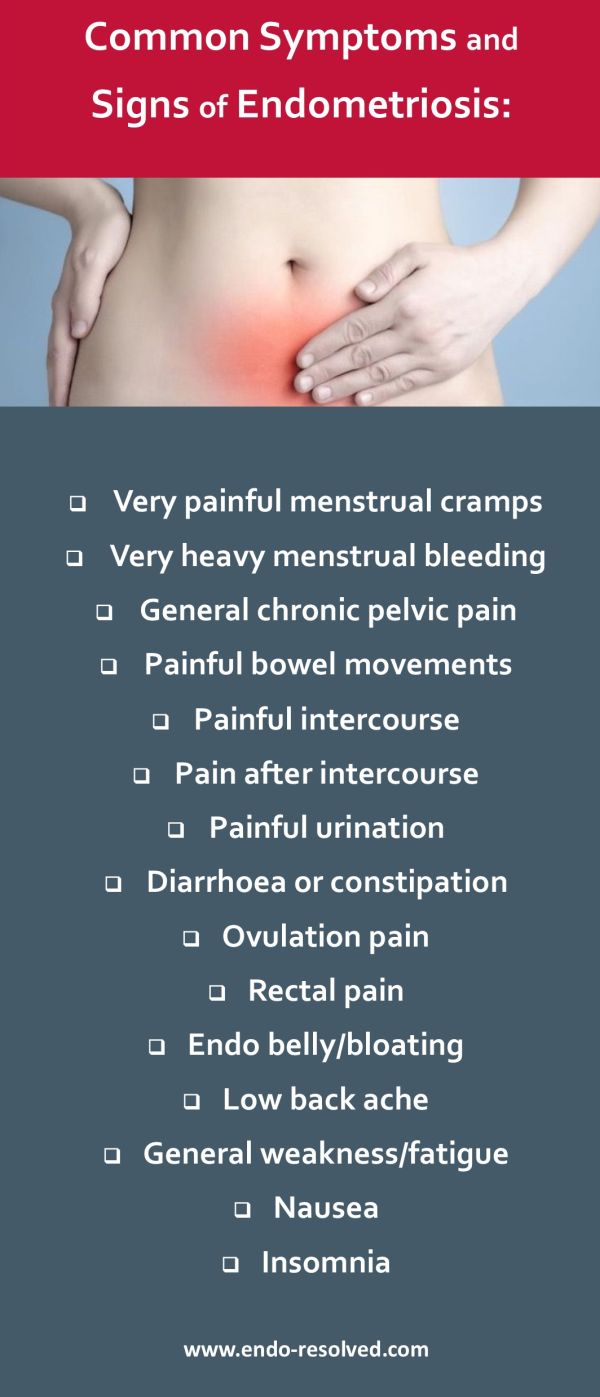
The most common symptoms of Endometriosis are:
- Pain before and during periods
- Pain with intercourse
- General, chronic pelvic discomfort and aches throughout the month
- Low back-ache
- Heavy and/or irregular periods
- Painful bowel movements, especially during menstruation
- Painful urination during menstruation
- Fatigue
- Infertility - estimated for about 40% of women
- Diarrhoea or constipation
- General digestive disorders
Other problems which are common can include:
- Headaches
- Low grade fevers
- Depression
- Hypoglycaemia (low blood sugar)
- Anxiety
- Susceptibility to infections, allergies
In the later stages adhesions usually develop in the pelvic cavity, which are caused by untreated cysts, which can ‘glue’ pelvic organs together. These adhesions can seriously interfere with normal functions of organs in the pelvis, causing bowel obstructions, digestive problems, infertility, urinary problems, problems when adhesions are pulled, and mobility issues.
Other health issues that may show similar signs to endometriosis include:
- ovarian cysts
- ectopic pregnancy
- Pelvic Inflammatory Disease
- irritable bowel syndrome
- fibroid tumours
- colon cancer
- appendicitis
Symptoms in relation to location in the body
Reproductive Area Endometriosis
There are various areas where endometrial tissue can develop in the pelvic cavity including:
- Ovaries
- The outside surface of the uterus
- Fallopian tubes
- Ligaments supporting the uterus
- Internal region between the rectum and the vagina
- Lining of the pelvic cavity
- Intestines
- Bowels
- Other organs within the abdomen
Pelvic area symptoms
Pelvic pain is one of the most common signs of Endometriosis. It can be excruciating and debilitating for many women. It may be experienced constantly, it may be intermittent or it may be related solely to the menstrual period. Pain can also be provoked by certain activities such as walking, standing too long etc., or it may occur unpredictably.
Occasionally abdominal and pelvic discomfort may be caused by Irritable Bowel Syndrome (IBS). These two diseases are quite common together, so it is advised to take note of the times you experience pelvic discomfort, as it may coincide after meal times.
Lower Back symptoms
Lower back ache is another common but poorly recognised symptom that often coincides with menstruation . It is commonly associated with implants in the pouch of Douglas, utero-sacral ligaments, and recto-vaginal septum.
Ovulation symptoms
Ovulation symptoms can occur in women who do not have the disease, but this pain will normally be a small twinge. In women with endometriosis, ovulation pain can be rather acute. It usually begins 12-24 hours before ovulation and may last for a few days.
This results from the normal enlargement of the ovary during ovulation which causes stretching of endometrial implants and adhesion's lying on the surface of the ovary. It is often described as ‘stabbing’ and it may radiate throughout the pelvic area and into the buttocks and thighs.
The main reproductive signs are:
- Chronic or intermittent pelvic discomfort
- Ectopic (tubal) pregnancy
- Dysmenorrhea (painful menstruation is not normal!)
- Infertility
- Miscarriage(s)
- Painful ovulation
Uterosacral/Presacral Nerve Endometriosis
- Backache
- Leg pain
- Painful Intercourse
Cul-de-sac ("Pouch of Douglas") Endometriosis
- Dyspareunia (pain during intercourse)
- Gastrointestinal symptoms
- Pain after intercourse
Gastro-intestinal symptoms
(recto-sigmoid colon, recto-vaginal septum, small bowel, rectum, large bowel, appendix, gallbladder, intestinal tract)
Endometriosis of the bowel is often overlooked or dismissed because many people think that the disease affects only the reproductive organs.
Many bowel problems are caused by irritation to the bowel from endometrial implants lying on adjacent areas such as the Pouch of Douglas and the back of the uterus, but some are due to endometrial deposits lying on the outside of the bowel wall.
The gastro-intestinal disorder which is most common with endometriosis is Irritable Bowel Syndrome which can cause many of the bowel symptoms mentioned above. Candida has also been found to be prevalent in women with Endometriosis, and this too can cause many distressing digestive upsets and discomfort.
The main Gastro-intestinal signs are:
- Nausea
- Diarrhoea
- Blood in stool
- Bloating
- Vomiting
- Rectal pain
- Rectal bleeding
- Tailbone pain
- Abdominal cramping
- Constipation
- Sharp gas pains
- Painful bowel movements
Other Locations of Endometriosis
Urinary Tract (bladder, kidneys, urethras, and urethra)
Urinary tract symptoms are usually the result of endometriosis lying on the outside of the bladder or irritation from endometrial implants lying on the front of the uterus.
The main signs of urinary tract endometriosis are:
- Blood in urine
- Painful or burning urination
- Hypertension
- Tenderness around the kidneys
- Flank pain radiating toward the groin
- Urinary frequency, retention, or urgency
Pleural (lung & chest cavity) Endometriosis
Very occasionally the disease can travel to the lungs, which will give rise to strange symptoms, and are usually related to the menstrual cycle.
- Coughing up of blood or bloody sputum, particularly coinciding with menses
- Accumulation of air or gas in the chest cavity
- Constricting chest and/or shoulder pain
- Collection of blood and/or pulmonary nodule in chest cavity (revealed under testing)
- Shortness of breath
Sciatic Endometriosis/ Hip pains
Hip pain or discomfort that radiates from the buttock and down the leg is common in women where it has affected the sciatic nerve. Also, endometriosis in the groin area can feel like hip pain.
On occasion adhesion's can restrict the hip ligaments, causing distress and limping. Hip joint pains that worsens in a cyclical fashion in line with the menstrual cycle will usually be caused by endometriosis.
Surgical treatment to remove implants is sometimes undertaken in the hope of relieving the hip joint problem associated with the disease.
Skin Endometriosis
Painful nodules, often visible to the naked eye, at the skin's surface. Can bleed during menses and/or appear blue upon inspection.
Dyspareunia (painful sexual intercourse)
Dyspareunia is a very common problem with this disease. Pain may be felt during intercourse as well as up to 48 hours after sexual activity - for some women the pain can last even longer. It is often associated with implants in the pouch of Douglas or adhesion's in the pelvic cavity. For help with dealing with painful sex read this article HERE
Fatigue
Fatigue and Endometriosis seem to go hand in hand. The fatigue can have various causes, and many diseases seems to cause daily fatigue. Often it is caused by the body trying to cope with the daily stress of dealing with pain, inflammation and a compromised immune-system.
This can be one of the most debilitating aspects of the disease, and most women with endometriosis experience fatigue around the time of their period and some experience it throughout the month. The fatigue may be related to the constant pain and/or medication, or it could be the bodies reaction to the disease at a deeper level. As your fatigue may be due to other health issues it may be advised to get further health tests which you can read about HERE
Abdominal Bloating
Abdominal bloating is another severe symptoms suffered by many which is referred to as endo belly. It is thought to be due to inflammation in the pelvic cavity caused by the endometriosis implants. Find out more about endo belly and how you can help reduce the pain and inflammation HERE
As mentioned above Irritable Bowel Syndrome (IBS) can cause pelvic pain, and can also cause severe abdominal bloating. With IBS, the bloating is usually caused by intestinal gasses which expand and distend the abdomen and can cause severe discomfort.
You might like these
Endometriosis Bowel Symptoms
Endometriosis bowel symptoms occur where the disease is present on the outside wall of the bowel
Endometriosis Adhesions
A description of adhesions and how they are caused by the disease or by post operative scarring
Endometriosis and fatigue
It is not clear why endometriosis causes such bad fatigue, but suffering severe illnesses often causes fatigue as the body is trying to cope. Here are few tips to help you manage your fatigue with endometriosis
Managing an endometriosis flare
Endometriosis commonly causes flares where symptoms become much worse and can sometimes lead to a visit to ER. Find out some of the triggers of a flare and self help measures you can use
Tips on managing your fatigue with endometriosis
This endometriosis guest article has some helpful tips and advice on how to manage the fatigue that is so common for most women who have endometriosis






About the Author
Hi, I am Carolyn Levett, the Founder here at endo-resolved - I am an Integrative Health Coach having studied nutrition, naturopathy and aromatherapy as well as being a published author of three endometriosis books. I used to suffer from severe endometriosis and was fortunate to be able to regained my health and recover from this disease with the support of nutrition, natural therapies and lots of determination.
My motivation is to help other women with endometriosis to heal their bodies so they may start to overcome this awful disease without having to totally rely on toxic drugs and surgeries which can cause further damage - with healing thoughts, Carolyn.
Reference:
https://www.mayoclinic.org/diseases-conditions/endometriosis/symptoms-causes/syc-20354656
https://en.wikipedia.org/wiki/Endometriosis
https://www.webmd.com/women/endometriosis/understanding-endometriosis-symptoms
 As featured in:
About Endo Blog Contact Disclaimer Site Map Privacy Policy Affiliate
Carolyn Levett BA, NT Nutritional Therapist -
Promoting health and well-being through nutrition, diet and lifestyle changes
The material on this website is intended for educational information purposes only.
It should not substitute or delay medical advice, diagnosis or treatment.
Unauthorized use of content or parts of content is prohibited without a written permission by the author.
www.endo-resolved.com Copyright (C) - All rights reserved 2025