Diagnosis of endometriosis
The Undetected Disease
Obtaining a true and correct diagnosis for Endometriosis can be one of the most drawn out, frustrating, and distressing experiences for many women.
These women know there is something wrong with their health as time goes by, but in most cases they are dismissed by their doctors as being neurotic, or told that their symptoms are normal, or they are given an inaccurate diagnosis, which in many cases is that of Pelvic Inflammatory Disease.
If you are suffering from any of the symptoms associated with endometriosis, you need to get diagnosed to find out what is causing your pain and health problems.
If your doctor appears unsympathetic or dismisses your symptoms, then you need to assert your suspicions of the seriousness of your health problems.
If you have no success then change your doctor or get a second opinion. The longer that this disease goes undiagnosed the more damage it can do. It is well documented that for many women, it can take anything up to ten years to finally get a true diagnosis.
Part of the problem that causes the delay in diagnosis, is that many people in the medical profession are not fully aware of the extent of this disease today. It is suspected that between 10 to 20 percent of women of reproductive age have the disease.
Also, many women have not even heard about Endometriosis, so they do not seek help when they do have symptoms, because many of them think their symptoms are normal. In fact a lot of women have only found information about endometriosis in magazines, the internet and from friends rather than from their doctor.
Another reason there is a delay in diagnosis, is that the symptoms may initially be attributed to a variety of other health problems like fibroids, kidney stones, irritable bowel syndrome, as well as pelvic inflammatory disease.
Methods of Diagnosis
There are a variety of methods that can be used to assess whether a woman has Endometriosis, but the only reliable way to confirm the presence of the disease is by visually inspecting the abdominal organs by a procedure called a laparoscopy. Before a laparoscopy is done a full gynaecological evaluation should be done covering the patient’s medical history.
Diagnostic methods can include:
Physical examination
A pelvic examination involves the physician feeling and looking for abnormalities that are associated with endometriosis. Physical findings depend on the severity and location of the disease. There may be palpable nodules or tenderness in the pelvic region, enlarged ovaries, a tipped-back (retro-displaced) uterus, or lesions on the vagina or on surgical scars.
Laparoscopy for diagnosis
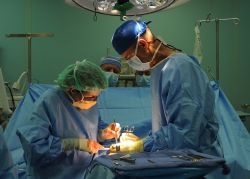
A laparoscopy is an exploratory procedure that allows the physician to see inside the pelvic region to observe and check for endometrial growths. The procedure involves making a small incision near the navel and inserting a laparoscope (a long, thin, lighted instrument) into the abdomen.
The abdomen is distended with carbon dioxide gas to make it easier to see the abdominal organs. Usually, the endometrial growths can easily be seen. Because Endometriosis implants or growths vary in appearance and can be mistaken for other conditions, the lesions should be surgically removed and examined under a microscope to confirm the presence of the disease.
Imaging tests
Imaging tests (e.g. pelvic ultrasound, magnetic resonance imaging) may be used to identify individual endometrial lesions, but they are not used to determine the extent of the disease. The implants are not easily identified using this method.
Biochemical markers
There has been extensive investigation of a membrane antigen called CA-125 in women with Endometriosis. Several reports suggest that levels of CA-125 are elevated in women with Endometriosis, particularly those in the advanced stages of the disease.
A recent study of this antigen level, showed it to be high in 90 percent of women with Endometriosis. Possible diagnosis with a blood test to check levels of CA-125 could be used to check for the disease.
Endometriosis is often left un-diagnosed
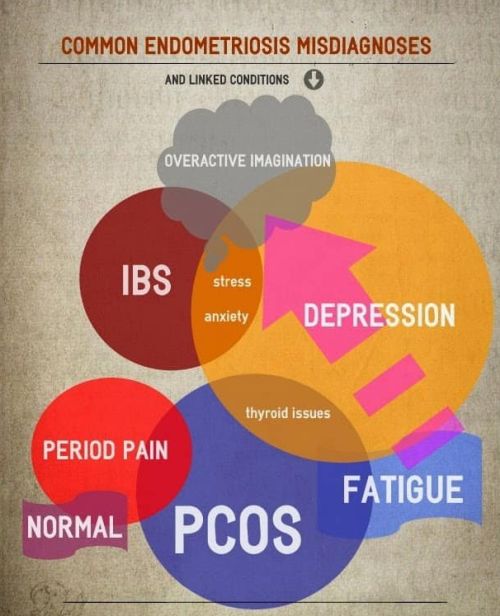
Endometriosis is commonly mis-diagnosed and for many sufferers the disease can remain undetected for many years. One average it can take 7 years to get a correct diagnosis
If you suspect at all that you may have endometriosis and are not getting any answers from your doctor it is advised to obtain a second opinion.
Endometriosis is measured in stages:
- Stage 1 - minimal disease, superficial and filmy adhesions
- Stage 2 - mild disease, superficial and deep endometriosis
- Stage 3 - moderate disease, deep endometriosis and adhesions
- Stage 4 - severe disease, deep endometriosis, dense adhesion
A further explanation of the stages of endometriosis can be found HERE
What does the disease look like!
Endometriosis can develop in almost any colour, shape, size and location. This includes clear, microscopic implants that can lodge themselves on the underside of organs or beneath the skin. The implants can be black, blue, red, brown, clear, and vary from microscopic to clearly visible in size.
The implants or growths can be spread throughout the entire abdominal cavity including the bowel, bladder as well as the outer walls of the uterus, the ovaries and fallopian tubes. One of the most common sites for endometrial growths is on the ovaries.
You might like these
adenomyosis versus endometriosis
These two disease cause very similar symptoms and both can be present at the same time and treatments are often similar
Endometriosis Cysts
What are endometriosis cysts, where are they formed, how do they form and how are these cysts treated
Endometriosis and Laparoscopy
Laparoscopy advice used for diagnosis and surgical treatment of Endometriosis
Endometriosis Articles
Endometriosis articles including advice about what endometriosis looks like, stages of endo, adhesions, drug treatment, intestinal endo, bowel symptoms
Endometriosis related to other diseases
It appears women with endometriosis may be at higher risk of developing other diseases including chronic fatigue, lupus, thyroid issues







Reference:
https://www.endometriosis-uk.org/getting-diagnosed-endometriosis
https://www.bmj.com/content/358/bmj.j3935
https://en.wikipedia.org/wiki/Endometriosis
 As featured in:
About Endo Blog Contact Disclaimer Site Map Privacy Policy Affiliate
Carolyn Levett BA, NT Nutritional Therapist -
Promoting health and well-being through nutrition, diet and lifestyle changes
The material on this website is intended for educational information purposes only.
It should not substitute or delay medical advice, diagnosis or treatment.
Unauthorized use of content or parts of content is prohibited without a written permission by the author.
www.endo-resolved.com Copyright (C) - All rights reserved 2025