Endometriosis - Diet & Nutrition
How diet changes can help reduce the symptoms of endometriosis
You are not going to ‘heal’ endometriosis with diet alone. However, anything you can do to control the inflammation is going to help calm your endometriosis. Nutrition is so important to provide optimal nourishment in combination with other healthy lifestyle choices.
Eating for endo is not about taking on an extreme diet. We are all different and respond differently to certain foods so you may not have any problems with some of the foods suggested to avoid. A short-term Elimination Diet will help you get to grips a learn which foods are your real symptom triggers. But let’s not forget that so many diseases can respond really well by making changes in the foods we eat.
There is scientific evidence that an anti-inflammatory diet can help manage endometriosis, though more high-quality research is needed. An anti-inflammatory diet is feasible in patients with endometriosis, according to a new study published in the journal Reproductive BioMedicine Online.
'The main goals of diet and lifestyle advice is to reduce inflammation, to help your body to cope with inflammation better and to support hormone regulation.' - The Endometriosis Foundation
It can be really helpful to hear of real-life experiences and gaining insights of other helpful tips from others who are dealing with endometriosis. These feedback messages from other women may give you that bit of hope and inspiration.
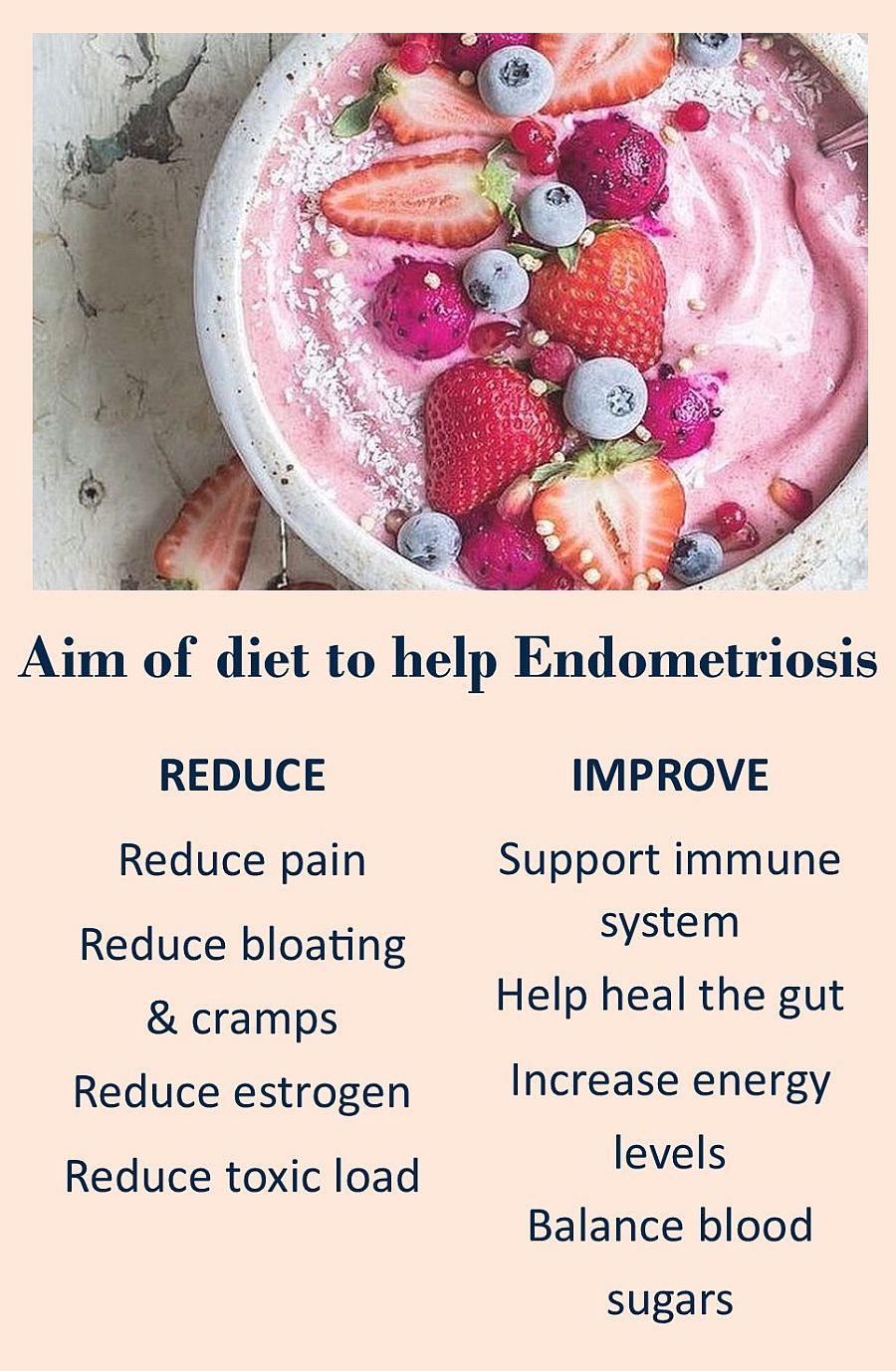
Changing your diet can help with the following:
- Reduce symptoms of pain
- Relieve cramps
- Reduce inflammation
- Reduce bloating
- Reduce estrogen levels
- Reduce toxins – found in e-numbers, additives, preservatives, pesticides and chemicals
AND changing what you eat can also :
- Help sustain energy levels - and stop the blood sugar drops
- Support your immune system- your main defence mechanism
- Heal gut health issues - like Irritable Bowel
AIM OF DIET TO REDUCE YOUR SYMPTOMS
Reduce inflammation
Endometriosis causes inflammation especially where there is damage caused by cysts and adhesions. Inflammation can also occur in the digestive tract which can be caused when endometriosis infiltrates the digestive tract, especially the bowel. Changing your diet to an anti-inflammatory diet will help to reduce inflammation and in turn will help reduce pain
Balance hormones
When dealing with endometriosis you need to keep estrogen levels under control as estrogen feeds the development of endometriosis. Certain foods contain phyto-estrogens, however they are not as potent as the bodies own estrogens. Eating some phyto-estrogenic foods can help to block estrogen receptors which will reduce the effect of your own estrogen hormones.
Reducing pain
Certain foods can cause pain and inflammation as they increase negative prostaglandins that are responsible for causing pain and inflammation in the body. By reducing your intake of foods that increase prostaglandins you will obviously be able to reduce pain and inflammation.
Gut health
Gut inflammation, leaky gut, and SIBO can contribute to poor absorption of nutrients which can result in poor immune health and inflammation. Eating foods that support the gut and avoiding foods that irritate the gut will aid in the whole healing process. You could be eating the best diet to help endometriosis, and using anti-inflammatory herbs and spices, but if your gut health is poor, the likelihood that you are absorbing your nutrients is reduced.
Blood sugar balance
Blood sugar imbalances can lead to inflammation, immune flares, hormonal imbalances, and compromised brain function. Supporting balanced blood sugar is critical for recovery from any inflammatory condition and ensures much needed energy levels are sustained in order to reduce further stress on the body.
Nutrient density
Every system in the body needs a wide array of nutrients to function at its best, including the immune system, your reproductive system and even your brain. Nutrient-dense foods are central to the diet, giving your body the tools it needs to heal deficiencies and support every function of the body.
Reduce toxins
By eating a clean, nourishing diet and not eating toxic foods that contain chemicals, e-numbers, preservatives and pesticides will help to detox and reduce stress on the body. This will help to speed the healing process.
Immune system support
Inflammation, leaky gut, hormone imbalances, blood sugar imbalances, and micronutrient deficiencies can all contribute to a compromised immune system. By reducing bacterial overgrowth and inflammation in the gut and supporting blood sugar regulation, the diet will help to support healthy immune function. Also, there is the need to calm an over-active immune system response by avoiding certain proteins like gluten and dairy, as these can disrupt the immune-system.

So where do we start!
Pain and hormones in relation to diet .....
Endometriosis is fed by estrogen synthesis in the body. This can take the form of:
- your own natural estrogen which is produced in the body
- the estrogen that is taken up from excess foods that contain phyto-estrogens
- from chemical based estrogens that are found in toiletries and cosmetics in the form of xeno-estrogens
The correct diet can help to balance these different forms of estrogen
There is often fear and worry about eating to many phyto-estrogens (foods that have estrogenic properties). However eating a balance of these foods can help to block your own estrogen receptors which will reduce the amount of excess estrogen from entering your system. You also need to reduce your use of xeno-estrogens (found in highly chemical based cosmetics and toiletries) in order to reduce xeno-estrogens from your system - which can worsen symptoms.
Prostaglandins and pain
Key inflammatory drivers when it comes to food . . . . as well as dealing with estrogen levels, you need to address the levels of prostaglandins in your body. Prostaglandins are very complex natural fatty acids and are derived from dietary sources. There are many different forms of prostaglandins and new types are still being discovered. The painful menstrual cramps you feel are actually due to prostaglandins, as well as the pain symptoms of endometriosis. A change in diet can alter the level and the types of prostaglandins in your body.
We actually have two main 'types' of prostaglandins - there are the 'good ones' and the 'bad ones'.
The aim of the endometriosis diet is to block the 'bad ones' because of their negative actions on the body, and increase the levels of the 'good ones' because of their opposite and positive effect. The action of the 'bad ones' will increase uterine contractions and pain, and increase inflammation. The role of the 'good ones' have a soothing effect and do the opposite to the bad ones. When you change the oils in your diet you can promote the good prostaglandins.
Omega 3 oils will reduce pain & inflammation
The good anti-inflammatory oils are found in the omega-3 fatty oil group, and lead to good prostaglandin production. Some of the best sources of omega-3 oils are found in marine and plant oils and include:
- oily fish
- walnut oil
- pumpkin seeds
- chia seeds
- dark green leafy veg
You can also supplement with omega 3 oil - aim to get the best quality possible. At the same time it is important to reduce intake of the fatty acids that stimulate negative prostaglandins which are found in saturated fats, animal fats and butter.
Fiber intake
It will help your symptoms if you increase your intake of fiber, as fiber will help to decrease the circulating estrogen in your system. The easiest sources of fiber to digest are found in fruit and vegetables as the structure and chemical make-up provide a more soothing effect while also aiding digestion. Also, extra fiber in the form of grains, brown rice and pulses etc., are helpful especially for their nutritional value, but keep your fiber intake balanced between the two.
These can include:
- whole grains ( excluding wheat - see below)
- beans, peas, pulses
- brown rice
- vegetables and fruits
- oatmeal
Hormone Balancing
Foods containing natural plant sterols (phyto-estrogens) can actually be helpful if consumed in careful balance. They can help to block the estrogen receptors, so in turn excess estrogen in the body cannot ‘lock-in’ to these receptors. These include:
- peas, beans and pulses
- red and purple berries
- leafy green vegetables
- brassica's: cabbage, cauliflower etc
- celery, carrots
- rhubarb
Suggested Foods to Avoid
This is a list of the food groups suggested to avoid to help reduce symptoms of endometriosis. You may not have problems with all these foods, but many women have success with reduced symptoms by avoiding a number of these food groups. Some of the suggestions of which foods to avoid are common sense even for healthy people, and when you are dealing with endometriosis you need to be extra vigilant to not be eating foods that are renowned for causing inflammation and increasing pain.
- Gluten - Many with endometriosis seem to have a negative reaction to gluten. A 2012 study (1) looking at endometriosis and the gluten link found that of 207 participants, 156 reported significant decrease in pain and bloating. Many with endometriosis have a predisposition for additional immune-system disorders which can include hypothyroidism, and gluten can set of a thyroid auto-immune reaction.
- Red and processed meats - promotes negative prostaglandins which cause inflammation and can also contain growth hormones. A 2018 study published in the American Journal of Obstetrics & Gynaecology found that a higher intake of red meat increases the risk of endometriosis by 56%. If eating white meat like chicken and turkey it is advised to only eat cage free/free range organic which has not been pumped full of hormones
- Refined and concentrated carbohydrates - white bread, flour, cakes, pasta etc. made from refined flours. Most of the nutritional value has been removed and can have a negative effect on blood sugar levels
- Refined sugars - causes inflammatory reaction, produces a more acidic environment in the body which can increase the inflammation of endometriosis. (honey is fine if you can get hold of certified organic honey)
- Caffeine - found in tea, coffee, soft drinks -increases abdominal cramps and caffeine increases estrogen levels. Caffeine is a known phyto-estrogen. Coffee is also known to inhibit the absorption of iron. Too much caffeine creates inflammation in the body and aggravates the digestive system.
- Chocolate (cheap commercial chocolate - as it contains sugar which is inflammatory - organic dark chocolate is fine especially if it has high cacao content which has health benefits
- Dairy produce - including milk, cheese, butter, cream - causes inflammatory reaction as they increase the inflammatory prostaglandins. Dairy products containing growth
hormones and antibiotics can also worsen endometriosis symptoms.
- Eggs - advised to leave out eggs unless you get organic as they may contain hormones.
- Fried foods - can stimulate negative prostaglandins
- Saturated fats and oils – Foods that are high in fatty acids stimulate the negative inflammatory prostaglandins. Fatty acids are found in saturated fats, butter, margarine, lard.
- Soy products and soy protein products - Soy is high in omega 6 which causes inflammation - tamari can be used in small amounts. Read more about soy and endometriosis HERE - opens in a new window
- Convenience foods - they contain a host of additives, cheap ingredients and have very little nutritional value
- Canned/tinned foods - use sparingly. Certain exceptions are fine like canned tomatoes, coconut milk etc.
- Additives and preservatives - increase chemical load on the system
- Alcohol - consumes vitamin B which is stored in the liver. Good liver function is vital as the liver will help to eliminate excess estrogen from the body. Alcohol also increase estrogen levels. Alcohol turns to sugar in the body and puts stress on the liver as it tries to filter toxins out of the body
Remember - this is a suggested list and not a catalogue of everything you should stop eating! In short you will be creating your own endo diet. One that
suits your needs and your own endometriosis health goals
A note about meat production:
Modern meat rearing now involves administering hormones to animals in the form of ear implants. One of these hormones, zeranol, is a form of estrogen made from mould called fusarium. Antibiotics have also been used as a growth promoter for forty years and we now get a small but insidious dose of antibiotics in nearly every meat and dairy product we eat.
In addition, a large percentage of women are noticeably zinc-deficient and some animals ingest copper-containing formulae which makes this balance even worse because copper is antagonistic to zinc. Copper also keeps estrogen levels high. Interestingly, copper is used in birth control pills as copper helps control the ovulation cycle.
You are strongly advised to go organic or eat white meat or oily fish to obtain your protein. Some women are OK when eating grass-fed beef, but for many red meat can set off symptoms of pain and inflammation.
To sum up
- Increase omega-3 fatty acids - especially oily fish
- Avoid red meat (OK for those who have no problems with red meat)
- Avoid dairy products, wheat and sugar - all of these are inflammatory
- Increase fibre intake especially with fruit and veggies - will help remove excess estrogens
- Avoid caffeine and alcohol - both inflammatory
- Avoid refined foods, e-numbers, additives
- Minimise or avoid soy products as they contain high levels of phyto-estrogens, and soy contains a particular toxin which seems to be particularly detrimental for women with endometriosis
- Eat organic produce wherever possible
- Drink plenty of filtered water
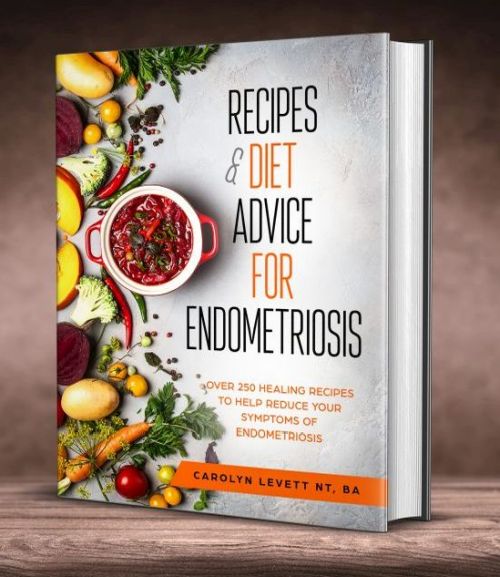
Recipes & Diet Advice for the Endometriosis Diet
A nutrition and diet book specifically to help endometriosis ....
The advice and recipes in this book are the bottom line, based on ingredients and nutrition tips that are best suited to help reduce the pain and inflammation of endometriosis - with over 250 recipes
The advice in the book also includes:
- In-depth recommendations of what to leave out of your diet and why
- Tips about estrogen and your diet, and how to keep it in balance
- Advice about diet and nutrition for fertility
- Recipes that are gluten free/lactose free as well as wheat free to help deal with issues of coeliac, candida, along with endometriosis
- Details of substitute ingredients as alternatives to milk, and butter, egg substitutes for baking, as well as sugar substitutes
- Shopping list - to help get you started
- Tips how to gradually introduce diet changes
- Snippets of nutritional advice woven among the recipes as you work your way through the book
All customised for a diet to help reduce your symptoms
Order:

Many women as well as medical professionals are now realising just how much our foods can change or affect our bodies.

About the Author
Hi, I am Carolyn Levett, the Founder here at endo-resolved - I am an Integrative Health Coach having studied nutrition, naturopathy and aromatherapy as well as being a published author of three endometriosis books. I used to suffer from severe endometriosis and was fortunate to be able to regained my health and recover from this disease with the support of nutrition, natural therapies and lots of determination.
My motivation is to help other women with endometriosis to heal their bodies so they may start to overcome this awful disease without having to totally rely on toxic drugs and surgeries which can cause further damage - with healing thoughts, Carolyn.
References:
https://www.ncbi.nlm.nih.gov/pubmed/15254009 - red meat and endometriosis link
https://www.ncbi.nlm.nih.gov/pmc/articles/PMC3626048/ - dairy consumption and endometriosis
https://www.ncbi.nlm.nih.gov/pubmed/23334113 - endometriosis and gluten link
https://academic.oup.com/humrep/article/25/6/1528/2915756 - dietary fat and endometriosis
(1) https://europepmc.org/article/med/23334113
https://www.ncbi.nlm.nih.gov/pmc/articles/PMC6066416/


About Endo Blog Contact Disclaimer Site Map Privacy Policy Affiliate
Carolyn Levett BA, NT Nutritional Therapist -
Promoting health and well-being through nutrition, diet and lifestyle changes
The material on this website is intended for educational information purposes only.
It should not substitute or delay medical advice, diagnosis or treatment.
Unauthorized use of content or parts of content is prohibited without a written permission by the author.
www.endo-resolved.com Copyright (C) - All rights reserved 2025